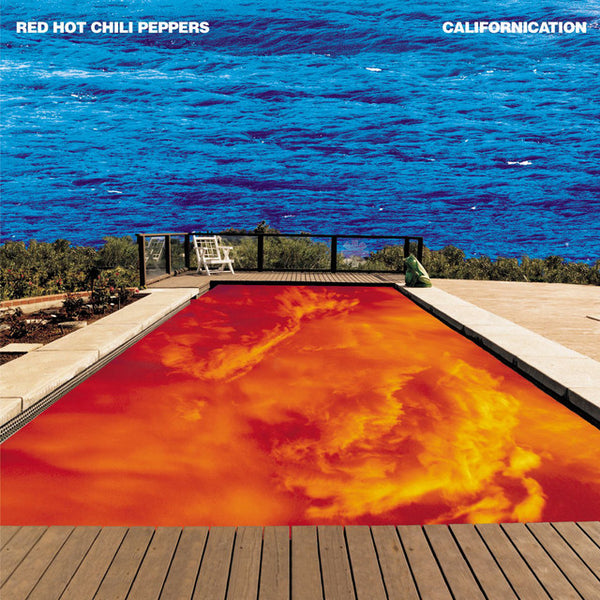
Californication
John Frusciante had been out of the band for six years. In that time his heroin addiction had consumed most of what he had built, and when the Chili Peppers found him again his house was in ruins and he had barely been playing guitar. Anthony Kiedis described the first rehearsal when Frusciante arrived and hit a chord as eight billion volts of electricity. Frusciante knocked things over. It was chaotic, like a kid setting up a Christmas tree. And immediately they all knew the album would be something.
The band recorded at Cello Studios on Sunset Boulevard through the early months of 1999 with Rick Rubin, who was surprised to find them arriving on time every day, professional and sober. Previous sessions with Rubin had involved day-long fog and distraction. This time they moved fast. Frusciante adopted a deliberately minimalist approach because his technical capacity was still rebuilding, and Kiedis later said he loved the result precisely because of that restraint. The band wrote thirty to forty songs and distilled them down to fifteen. Frusciante finished the riff for the title track two days before recording it. "Scar Tissue" won a Grammy for Best Rock Song and spent sixteen weeks at number one on the Billboard Modern Rock chart.
The record is more melancholy and more spacious than anything the Chili Peppers had done before, and that space is where it lives. "Otherside" was written about Hillel Slovak, the original guitarist who died of a heroin overdose in 1988. "Road Trippin'" closes the album like a deep exhale. Californication became the band's best-selling record with fifteen million copies worldwide, and it sounds like a band that had almost lost everything grateful to be in the same room.