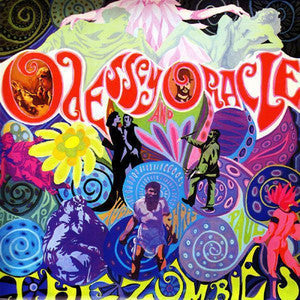
Odessey and Oracle
Rod Argent believed The Zombies were about to be dropped from their label. Rather than wait for the end to arrive, he decided that if the band was going to break up, they should first make the album they had always wanted to make. They signed to CBS in 1967 on one condition: they would produce it themselves. CBS agreed. The Zombies moved into Abbey Road Studios immediately after The Beatles finished recording Sgt. Pepper in the same rooms. They made the album on a tight budget across the second half of 1967 and ran out of money before they finished.
The label came back and told them the mono mix they had delivered was fine, but a stereo mix was also required and they had used up their budget. Argent and Chris White paid two hundred pounds of their own royalty money to remix it in stereo. Some horn parts from "This Will Be Our Year," recorded directly onto the mono version, could not be moved to the stereo mix and were left off. By the time the album was released in April 1968, the band had already broken up.
Then the album sat there, largely ignored, for almost a year. Al Kooper, newly working in A&R at Columbia, brought a copy back from England and convinced label head Clive Davis to release it in America. In early 1969 "Time of the Season" was issued as a single and climbed to number three. A full year after the British release, The Zombies had a posthumous top ten hit with an album its own singer had initially disliked, Colin Blunstone having fought with Argent in the studio over recording it. Odessey and Oracle is now considered one of the finest British pop albums of the 1960s, a baroque and heartbreaking record that the band who made it had already given up on before anyone heard it.